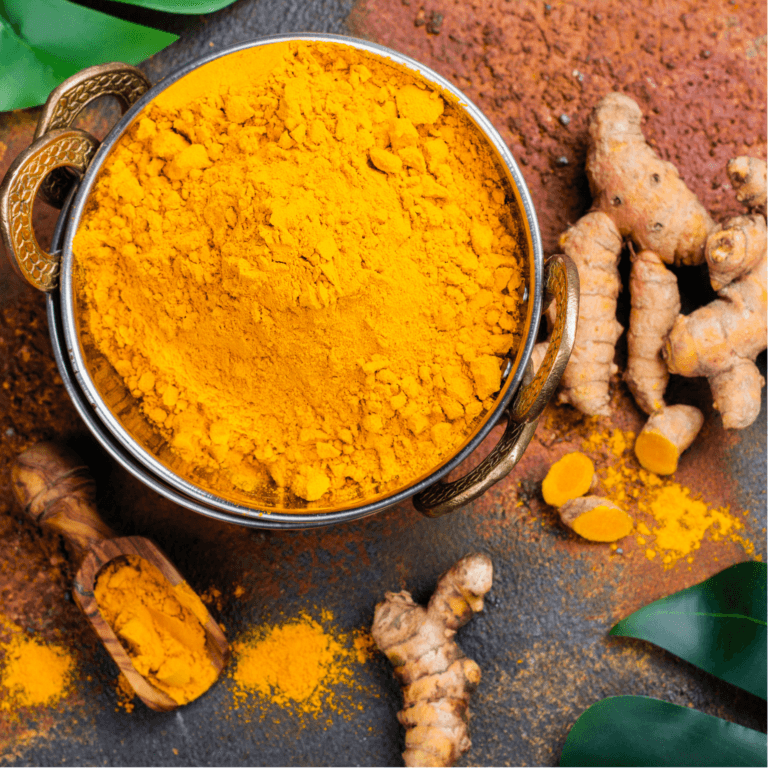
Turmeric, scientifically known as “Curcuma longa,” is not just a spice but a cultural symbol. It belongs to the Zingiberaceae family, a member of the ginger family and a perennial upright herbaceous plant. The turmeric leaves, dark green at the top, and the yellow to white flowers grown at the top of the stalk with brown seeds add a statement to its natural beauty. Turmeric is grown and cultivated only through its underground rhizomes, which are passed down through generations. As a native plant to Southern India and Indonesia, it holds a special place in the hearts and kitchens of these regions. Turmeric’s rich cultural, religious, and medicinal history is a testament to its enduring significance.
In 700 (A.D.), traders began to trade turmeric to the Middle East and Africa. Turmeric gained popularity due to its golden-yellow color, and people started to use it as a natural dye for coloring cloth. The color of turmeric later became a sign of luxury among people. In the 13th century, traders began to trade turmeric to Europe, where it was used as a dye and gained its credentials as a spice and medicinal agent.
THE POPULARITY OF TURMERIC IN THE CULINARY WORLD
Turmeric is a yellow to golden spice with a peppery, stinging aroma and mustard flavor. It is widely used in the Subcontinent region and the Middle East to make curry, pickles, and vegetables and in a mixture of spices to cook meat, fish, and many other dishes. Later, due to its popularity in South Africa, people started using turmeric to give a beautiful golden hue to rice.
Moreover, from the past few decades’ turmeric, due to its color-giving essence and distinct peppery flavor, has been used in food manufacturing industries for the manufacturing of dairy products, bakery items, especially yellow cakes, beverages, cereals, mixed cooking spices, sauces, and gelatins. Turmeric milk is also a famous beverage in Asia and the Middle East.
Healing recipe-The Golden Milk
Turmeric Milk, also known as “Dhood Haldi” in the Subcontinent and famous as “The Golden Milk,” is the healthiest, taste buds-kicking recipe with nutritional and medicinal benefits. Turmeric has anti-bacterial, antioxidant, anti-mutagen, anti-cancer, and anti-inflammatory properties, making it a magic potion for healing your body.
In ancient times, turmeric milk was believed to boost our immune system, maintain healthy cell functioning, and provide healing credentials for arthritis patients. In the present, Asian mothers are still convinced by this magical portion and make their children have it for curing body aches and infections.
How to make Golden Milk
- Take a cup of milk.
- Heat it on middle to low flame for a while.
- Add a pinch or two of turmeric to the milk and stir well.
- Let it cool slightly to avoid burning your mouth, and enjoy your drink.
Note: You may add a sweetener to enhance flavor according to your taste.
HEALTH BENEFITS OF TURMERIC
Turmeric consists of 100 components responsible for its medicinal and nutritional benefits. The main components of turmeric are volatile oil, curcuminoids, sesquiterpenes, and a few polysaccharides. The nutritional analysis showed that turmeric contains sodium, potassium, fat, saturated fat, calcium, iron, thiamine, phosphorous, riboflavin, niacin, ascorbic acid, carbohydrates, dietary fiber, sugars, and protein. Turmeric is also a good source of the ω-3 fatty acid and α-linoleic acid. The presence of these components gives turmeric its aroma, flavor, color, and other medicinal properties.
Scientific research has uncovered a wealth of health benefits in turmeric, making it more than just a spice. It possesses antiseptic, anti-bacterial, anti-mutagen, anti-inflammatory, and anti-cancer properties. These properties, combined with its immunity booster characteristics, hepatoprotective and wound-healing nature, make turmeric a powerful ally in maintaining health and wellness. By understanding these benefits, you can make informed choices about incorporating turmeric into your diet and lifestyle.
Wound healing property
Turmeric possesses antiseptic and anti-bacterial properties, so it was used to heal wounds in ancient times. During the war, ancient people used turmeric to clean and heal wounds.
Anti-inflammatory property
Turmeric has anti-inflammatory properties and is used as an herbal medicine for the treatment of arthritis and infection.
Anti-aging
The presence of free radicals in the body causes aging and oxidative stress. Turmeric has potent antioxidant properties and stimulates the activity of certain other oxidants.
Antioxidant Effects
Turmeric is rich in antioxidants, which help neutralize harmful free radicals and reduce oxidative stress in the body.
Potential Cancer Prevention
Some studies suggest that turmeric may help prevent certain types of cancer by inhibiting the growth of cancer cells and reducing tumor formation.
Improved Digestion
Turmeric has long been used to aid digestion and relieve gastrointestinal discomfort. It stimulates bile production and enhances the activity of digestive enzymes.
Joint Health:
Its anti-inflammatory properties may relieve joint pain and stiffness, making it beneficial for conditions like arthritis.
Heart Health
Turmeric may help improve heart health by reducing cholesterol levels, preventing blood clot formation, and improving blood vessel function.
Brain Health
Turmeric has been studied for its potential role in promoting brain health and reducing the risk of neurodegenerative diseases like Alzheimer’s.
Skin Benefits
When applied topically, turmeric may help improve skin conditions like acne, eczema, and psoriasis due to its anti-inflammatory and antimicrobial properties.