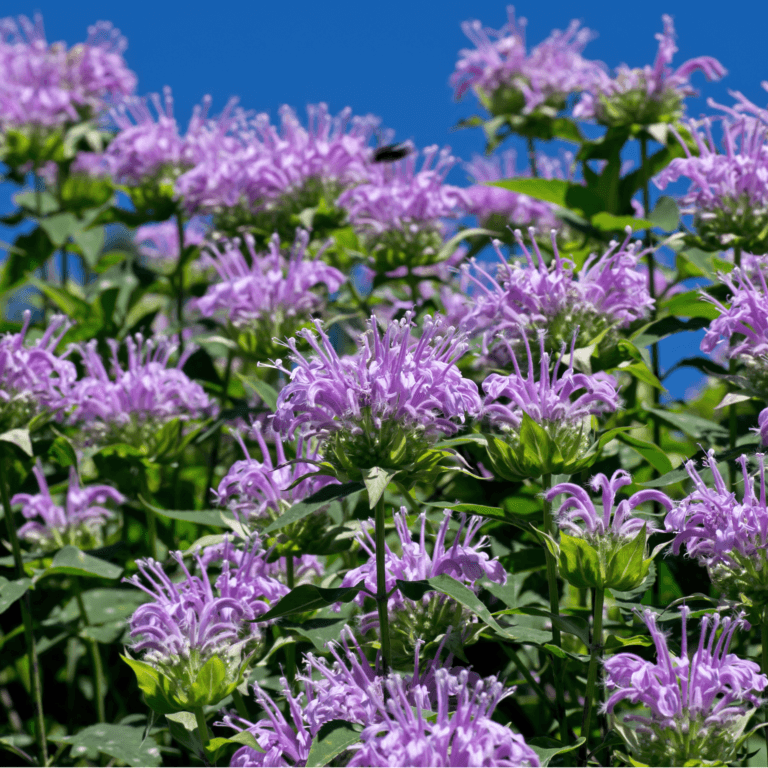
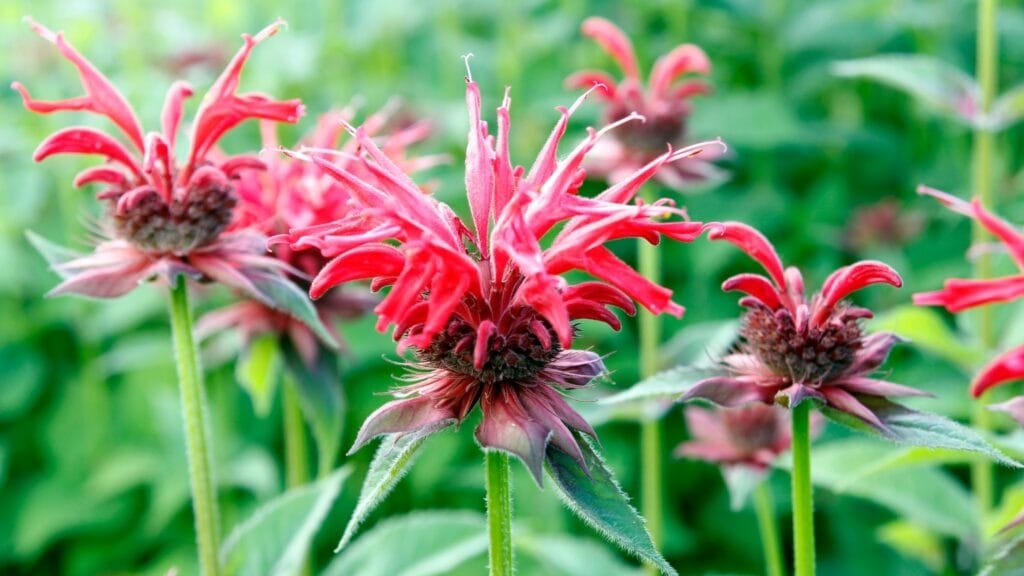
Bee balm is a perennial plant belonging to the genus Monarda’, family ‘Lamiaceae’; this family includes flowering plants and is commonly called a plant from the mint, deadnettle or sage family. Bee balm is native to North America (3). The wild bee balm or bergamot is known as ‘Monarda fistulas’, and the other is known as ‘Monarda didyma’; these are dense pink to purple-red and burgundy color round flowers with tubular petals and the square stem. The leaves are of lanceolate shape aligned parallel to each other, have a mild fragrance, and are used to make Oswego tea. These flowers bloom in spring or summer and provide a force of attraction for pollinators.
Environmental conditions
Bee balm typically grows 2-4 feet tall and 2-3 feet wide. Bee balm requires full sunlight and good airflow to protect it from powdery mildew problems. In addition to sunlight for approximately six or more hours, these plants require moist soil with acidic pH
NUTRITIONAL BENEFITS OF BEE BALM
Bee balm is not just a pretty plant; it’s a powerhouse of nutrition. Packed with Vitamin C and dietary fibers (1), it offers a range of health benefits. Vitamin C, known for its antioxidant and immune-boosting properties, aids in fast healing and the formation of healthy veins, muscles, and cartilage. The dietary fibers in bee balm promotes healthy digestive functioning, making it a valuable addition to your diet.
Bee balm is used in making bread, salads, desserts, and many other dishes due to its high nutritional content, traditional benefits, and distinct flavor.
OSWEGO TEA
A part of bee balm plant makes it; it is a favorite of native American gardeners and is used by people as medicine;
Indigestion
Cold, fever with chills
Flatulence
PMS (Pre-Menstrual Syndrome).
How to make Oswego Tea?
Take a spoonful of fine fresh or dried bee balm leaves. (Some may also use flower petals to make tea.)
Add these to the tea strainer.
Pour a cup of boiling water and allow it to steep for 10 minutes at least.
Enjoy your tea. Add sugar or honey to a sweetener of your choice if needed.
Precautions
Do not confuse Oswego tea with lemon balm
Do not take Oswego tea during pregnancy (as it may cause bleeding)
Please do not take it during breastfeeding (no exact evidence has been found regarding its safety during lactation)
MEDICINAL PROPERTIES OF BEE BALM
Bee balm contains a variety of beneficial compounds, including essential oils, thymol, carvacrol, flavonoids, tannins, and rosmarinic acid (4). Thymol, a significant constituent of bee balm, is known for its antiseptic and soothing properties. It is used in many anti-acne products and acts as an anti-inflammatory agent. The plant’s flavonoids and tannins contribute to its antimicrobial properties, while rosmarinic acid helps reduce allergic reactions and skin irritation.
People of North America use bee balm for its anti-microbial properties. Its anti-microbial properties are due to citral, which gives the plant a lemonary fragrance.
Bee balm also contains dietary fibers that help relieve ingestion.
Vitamin C has antioxidant properties that help it achieve its anti-inflammatory properties.
The presence of rosmarinic acid helps reduce allergic reactions and skin irritation. So, native people use it to treat irritation and eczema.
It is also added to meals to increase the nutritional properties of the meal.
Medically reviewed by Jerlyn Jones, MS MPA RDN LD CLT, Nutrition — Written by Sarah Garone on January 4, 2022
Sarah Garone is a nutritionist, freelance writer, and food blogger. Find her sharing down-to-earth nutrition info at A Love Letter to Food or follow her on Twitter.
The health and wellness newsletter you’ve been looking for
Interested in exclusive interviews, must-have products, and staying updated with trending news? Wellness Wire has it all, and you don’t want to miss out.